Heated Rivalry and the Power of Wanting Something Out Loud

Some shows break out. Heated Rivalry detonated.
The scale of its success still feels slightly unreal, especially because it arrived without the usual machinery that accompanies cultural domination. No one seemed to be planning for this. Not Crave Canada. Not Rachel Reid, whose beloved novel inspired the series. Not director and writer Jacob Tierney. And certainly not Hudson Williams and Connor Storrie, who have gone from quietly grinding toward their dreams, working restaurant jobs and taking whatever work they could get, to suddenly being among the most talked-about faces of this awards season.

Yet here we are. Heated Rivalry has taken the world by storm in a way that feels both sudden and inevitable. What began as a passionate adaptation for a devoted readership has exploded into a global obsession. Nightclubs play edits from the show on their screens. Bars host weekly episode screenings where strangers gather like it is a playoff game. Professional hockey players are openly discussing the series, its emotional impact, and what it gets right about the sport on platforms like the Empty Netters podcast. It has crossed the invisible line from “popular show” into something communal, something people experience together.
The ascent of its two leads has mirrored the show’s rise. Hudson Williams and Connor Storrie are now fixtures at awards season parties, presenting at the Golden Globes, being openly gushed over by stars like Tessa Thompson, and already rumored to be headed for the Met Gala. Watching their rise in real time has been part of the phenomenon. These are not performers who arrived as celebrities. They feel earned. Their visibility feels like the result of audience devotion rather than industry calculation.

At the center of it all is a love story that refuses to apologize for its intensity. Heated Rivalry understands yearning in a way contemporary film and television too often avoid. It lingers. It lets looks stretch, silences speak, and emotions overwhelm rather than resolve neatly. In doing so, it taps into something audiences have been deeply hungry for, whether they realised it or not.
Hudson Williams delivers something genuinely special as Shane Hollander. His performance is shy, internal, and exquisitely detailed, offering an autistic character portrayed with care and specificity rather than shorthand. Shane’s reserve is not emptiness but density. Williams communicates entire emotional arcs through restraint, timing, and physicality. Watching him feels like watching someone think and feel in real time.
Opposite him, Connor Storrie’s Ilya Rozanov is all volatility, confidence, and hunger. Storrie’s Russian-speaking performance has become one of the show’s most talked-about elements, and for good reason. That a Texan actor could so convincingly inhabit a Russian identity that even Russian viewers believed him speaks to the depth of his work. Ilya’s intensity could easily tip into excess, but Storrie grounds it in sincerity, making the character feel electric rather than performative.

Every element around them rises to meet that level. The dialogue feels natural without being casual. The cinematography knows when to be intimate and when to let the space breathe. The direction trusts the audience to sit with discomfort and desire instead of rushing toward payoff. And then there is that club scene. The one that refuses to loosen its grip. Every clip of it circulates endlessly online, and every time it appears while scrolling, it demands to be watched in full. Goosebumps, every single time. It is a perfect distillation of what Heated Rivalry does so well: turning longing into spectacle without losing emotional truth.
What this phenomenon ultimately proves is something deceptively simple, yet too often ignored. People love romance. People love yearning. People want stories that take intimacy seriously, that allow desire to be messy, overwhelming, and central rather than incidental or ironic. Heated Rivalry did not invent that need, but it recognised it, trusted it, and answered it at exactly the right moment.
Women, in particular, have been the driving force behind the show’s success. This is not accidental. For decades, women have been the most loyal and enthusiastic consumers of romantic storytelling, yet their tastes are routinely underestimated, trivialized, or diluted. Heated Rivalry refuses to sanitize its emotional stakes. It offers longing without apology and vulnerability without condescension. Women did not simply watch this show. They championed it, shared it, edited it, gathered around it, and turned it into a communal experience. The virality did not come from a marketing push. It came from recognition.
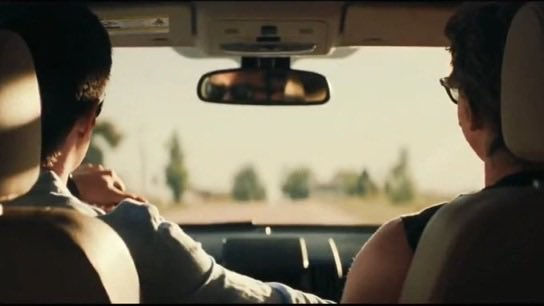
Just as important is the fact that this is a queer love story, and one that refuses to treat queerness as either a problem to be solved or a tragedy to be endured. Heated Rivalry presents its central relationship as a great romance, full stop. The tension does not come from shame or moral punishment, but from timing, fear, desire, and emotional risk. In a media landscape where queer stories are still often framed as niche or conditional, this matters enormously.
The show also offers something still far too rare: men allowed to be openly vulnerable, undone by love, and emotionally expressive without irony or embarrassment. Heated Rivalry does not frame male tenderness as weakness or novelty. It treats it as powerful. Watching two men yearn for each other with sincerity and depth feels radical not because it should be, but because we are so unused to seeing it treated with this level of seriousness.
This may explain why Heated Rivalry has broken through to an audience far beyond what was expected, including A-list actors and industry tastemakers who do not typically rally around romance as a genre. This is not just popularity. It is respect. The show is being discussed in rooms that do not usually engage with queer romance as something expansive or artistically significant. It is being praised not only for its appeal, but for its performances, emotional intelligence, and confidence in intimacy.

The contrast with The Summer I Turned Pretty is instructive. That series became a massive global sensation, but its success largely remained within expected boundaries. It was widely consumed, but not disruptive. Heated Rivalry, by contrast, feels like it has crossed an invisible threshold. It is not just watched in private. It is shared, debated, celebrated, and carried outward into culture.
What makes Heated Rivalry special is not simply that it is romantic, or even that it is exceptionally good at being romantic. It is that it trusts its audience with emotional depth and queer intimacy without compromise. It allows longing to breathe. It believes people will meet that intensity rather than recoil from it. And they have.
This is not just a successful show. It is a cultural correction. A reminder that queer love stories can be expansive and electric, that male vulnerability can be compelling rather than embarrassing, and that audiences will show up in massive numbers when emotion is treated as something worthy of time and care. Sometimes the biggest moments do not announce themselves loudly. They arrive quietly, then all at once.
Heated Rivalry is not just being watched. It is being felt. And right now, it feels like it is everywhere.


Comments